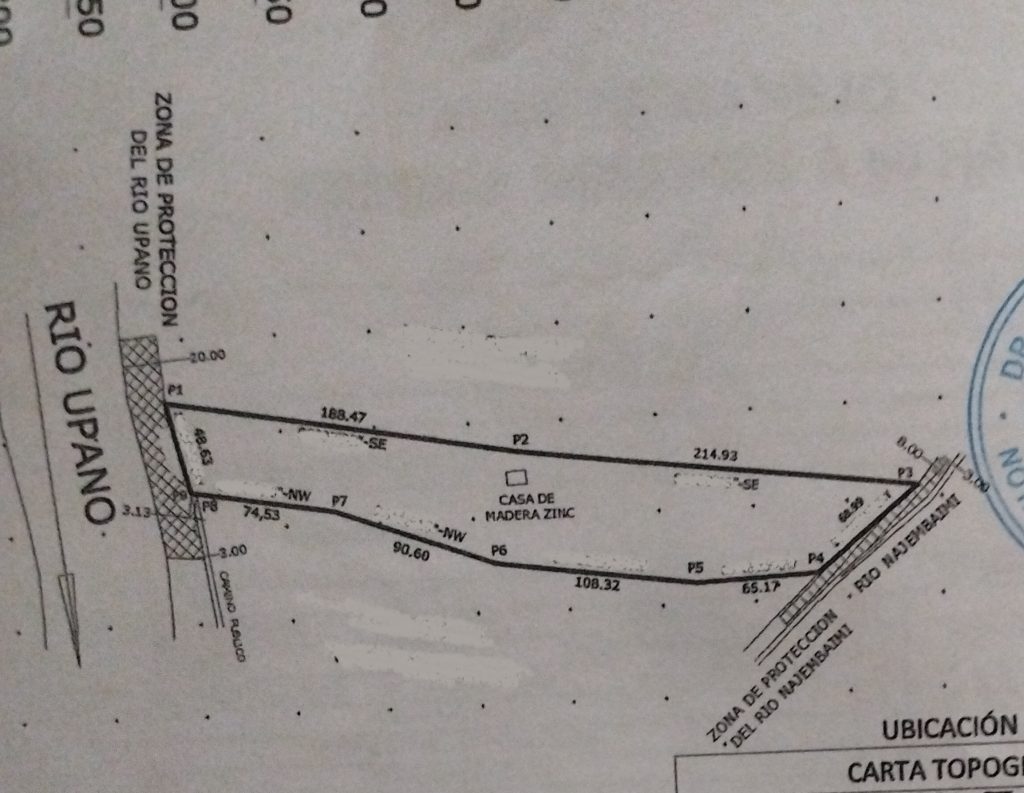
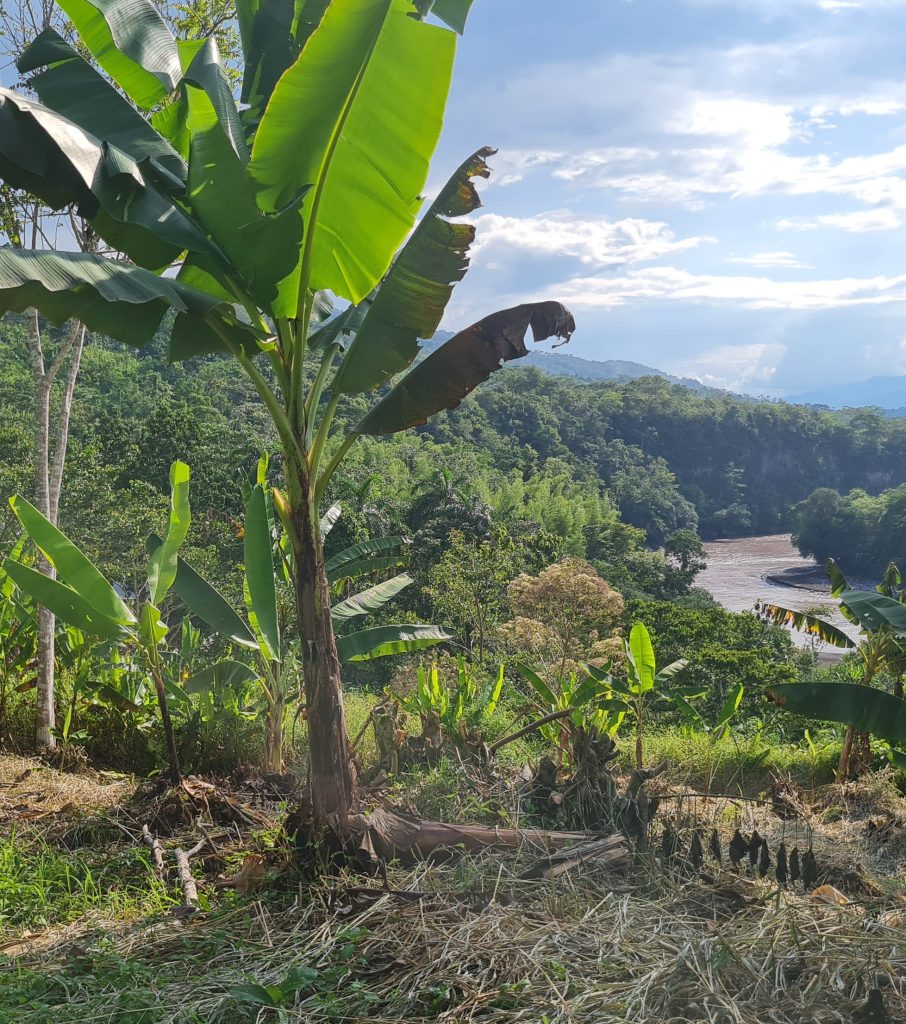
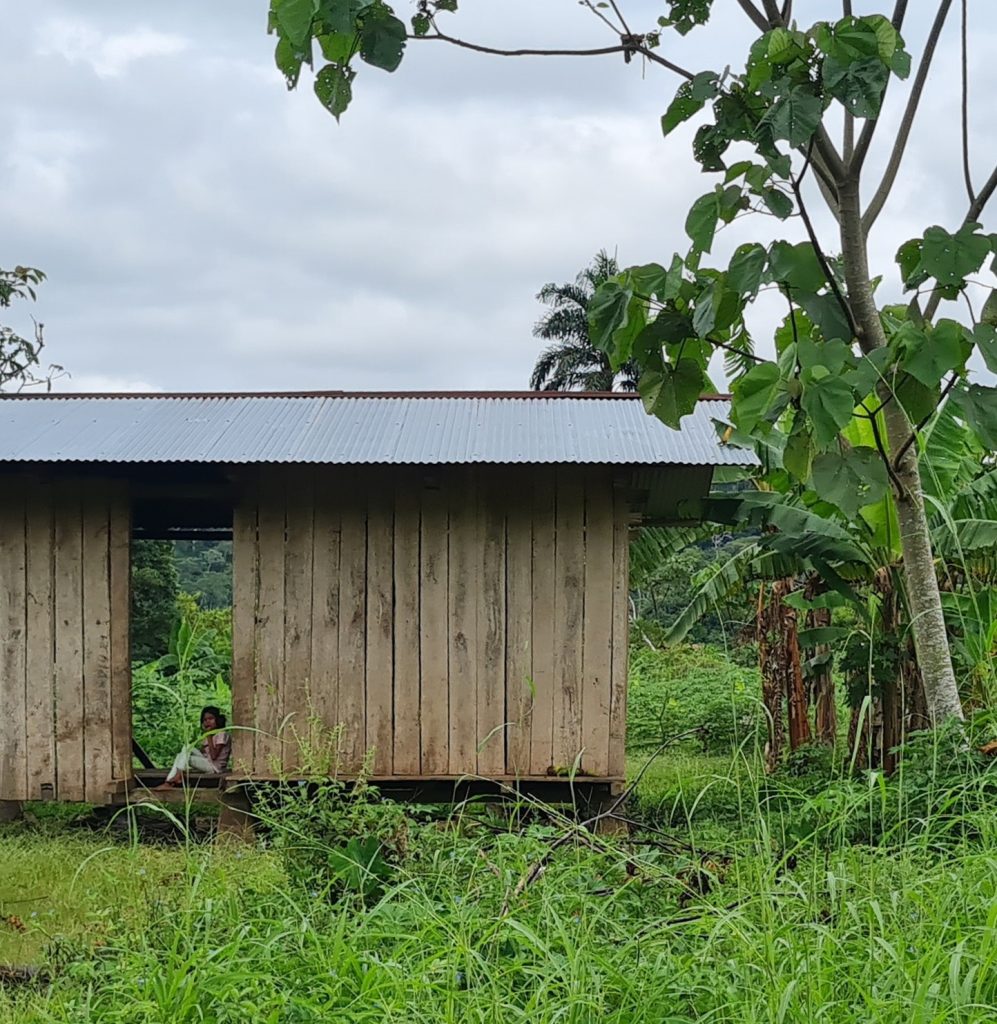
Najempaim Playa is an initiative aimed at conserving and observing a small area of Amazon rainforest located between the Upano Riverand the Najembaimi River, in the canton of Logroño, province of Morona Santiago, Ecuador.
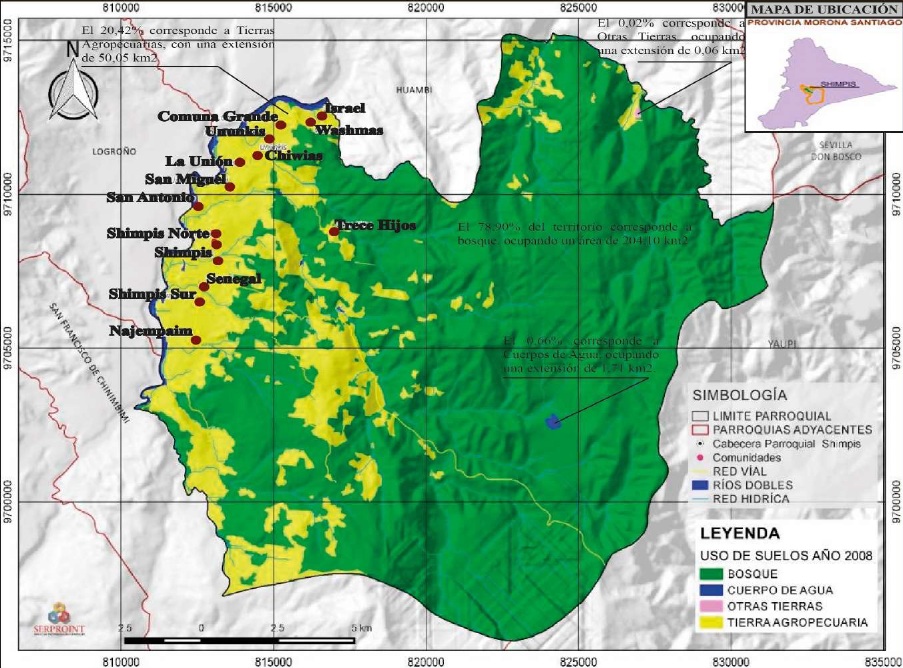
The property forms part of the territory of the Shuar community of Najempaim – Shimpisand is located in the surroundings of the Kutukú-Shaimi Protected Forest, a region of great natural richness and biodiversity.
The project was created with the intention of maintaining this place with minimal intervention, encouraging the natural regeneration of the forest and the respectful observation of the Amazonian landscape.
Origin of the Project
Najempaim Playa originated from an interest in conserving a small territory within a much larger landscape.
The property, of approximately two hectares, lies between two watercourses: the Upano Riverand the Najembaimi River. This location creates a small natural corridor between the Kutukú mountain rangeand the Amazonian valley.
Despite its small size, the place brings together different natural environments that allow the observation of the dynamics of the forest, the water and the biodiversity characteristic of the region.
Objectives
The main objectives of the Najempaim Playa project are:
to conserve the Amazon rainforest present on the property
to encourage the natural regeneration of vegetation
to observe and document the biodiversity of the area
to facilitate studies and inventories of flora and fauna
to share knowledge about the Amazonian landscape.
An Open Project
Najempaim Playa is conceived as a space open to collaboration with people interested in nature, biodiversity and the conservation of the Amazon rainforest.
Students, researchers, members of the local community or visitors can contribute to documenting the landscape, recording species or simply observing the evolution of the forest over time.
Vision
Najempaim Playa aims to become a small observation point for the regenerating Amazon rainforest, where respect for the land and collaboration between people can help improve the understanding of the natural richness of this region of the Ecuadorian Amazon.
Najempaim Playa is a small place within a much larger ecosystem, where the river, the forest and time continue shaping the Amazonian landscape.